The Trust Transaction: Why Indian Parents Pay for Peace of Mind (Not Products)

The Indian consumer landscape is shifting. Tectonic plates are moving beneath the feet of D2C founders, and nowhere is this more violent than in the baby care sector.
We often categorize baby products alongside fashion or electronics - basic e-commerce. This is a fundamental error. When a consumer buys a phone and it breaks, they lose money. When a parent buys a baby product and it fails, they fear harm.
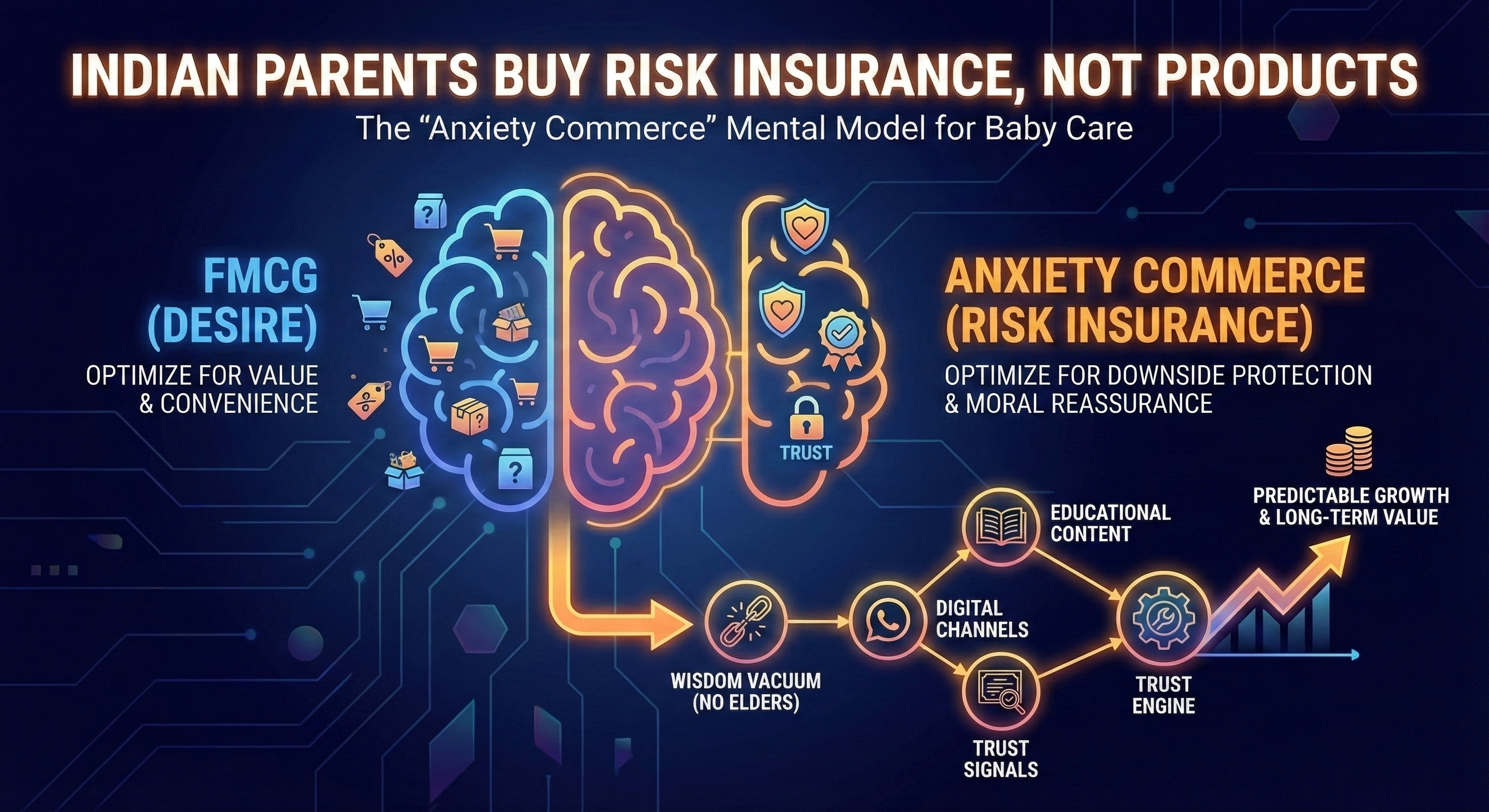
That asymmetry changes everything. It turns the market into a domain of Anxiety Commerce.
In this market, fear converts faster than desire. Trust compounds faster than discounts.
The Death of the Wisdom Safety Net
To understand the wallet, you must understand the home.
India is transitioning from joint families to nuclear units. In the past, the “Chief Medical Officer” of the household was the grandmother - Dadi or Nani. She decided which oils were safe, which herbs cured colic, and which remedies worked. Her authority was absolute, and her confidence was inherited by the mother.
In Tier 1 and Tier 2 cities, that matriarchal safety net has disappeared. What remains is a wisdom vacuum.
New parents are isolated, time-poor, and information-overloaded. Search engines and social feeds have replaced elders. This creates a brutal truth for brands:
Education is not marketing. It is infrastructure.
Brands that provide credible, scientific, and consistent guidance step into the role once held by the trusted elder. The rest are treated as sellers - and sellers are distrusted by default.
The Three Phases of Anxiety Spending
“Peace of mind” is not static. It evolves as the child grows. Pricing, bundling, and messaging must evolve with it.

Phase 1: Survival Anxiety (0–6 Months)
The mindset is simple and primal: Will this hurt my baby?
Risk aversion is extreme. Price elasticity is close to zero. Parents are not bargain hunting; they are danger avoiding.
Discounting backfires here. A “50% OFF” badge on a newborn cream signals low quality or expiry risk to a fearful brain.
In early infancy, discounts erode trust faster than they increase conversion.
The winning tactic is bundling. A “Newborn Starter Kit” reduces cognitive load and reframes the purchase as a safety system, not a transaction.
Phase 2: Exploratory Anxiety (6–24 Months)
The fear shifts from survival to development: Is my baby growing right?
Parents begin to experiment. Usage volume spikes - diapers, wipes, washes. The household becomes more operational.
This is where value signals start to work. “Buy 2 Get 1 Free” succeeds because it signals abundance and preparedness, not cheapness.
The parent is no longer frozen by fear. They are cautiously optimizing.
Phase 3: Aspirational Anxiety (2–5 Years)
Now the fear turns social and competitive: Is my child falling behind?
Spending moves toward cognitive development, skills, and social signaling. Education toys, learning kits, and school-readiness narratives dominate.
In this phase, you are no longer competing with other brands. You are competing with future regret.
Messaging must focus on milestones, skills, and confidence - not ingredients alone.
Your Homepage Is Not a Storefront. It’s a Reassurance Engine.
Indian parents do not browse first. They verify first.
If your website looks like a catalog, you lose. It must look like a vault of safety. Before price, before offers, before testimonials, parents scan for proof.
The trust hierarchy is predictable.
Safety certifications must be visible and clickable above the fold. Ingredient transparency must emphasize the “no-list” - what you refuse to include. Visual proof matters more than copy. Video testimonials outperform text because they are harder to fake.
A beautiful UI without visible trust signals feels deceptive in high-anxiety categories.
Design aesthetics matter, but reassurance converts.
The Hidden 40% Revenue Lever: WhatsApp and Vernacular
English is a barrier to entry for Bharat.
Metro elites are comfortable navigating English-first interfaces. The aspirational middle - India 2 - wants clarity in its own language.
WhatsApp is not a channel. It is the operating system of Indian commerce. Open rates touch 98%, compared to roughly 20% for email.
Regional language content routinely drives engagement lifts of up to 79%.
If you are not selling in Hindi, Tamil, Kannada, or Telugu on WhatsApp, you are invisible to the fastest-growing segment of the internet.
Trust accelerates when comprehension is effortless.
The 40-30-20-10 Content Rule
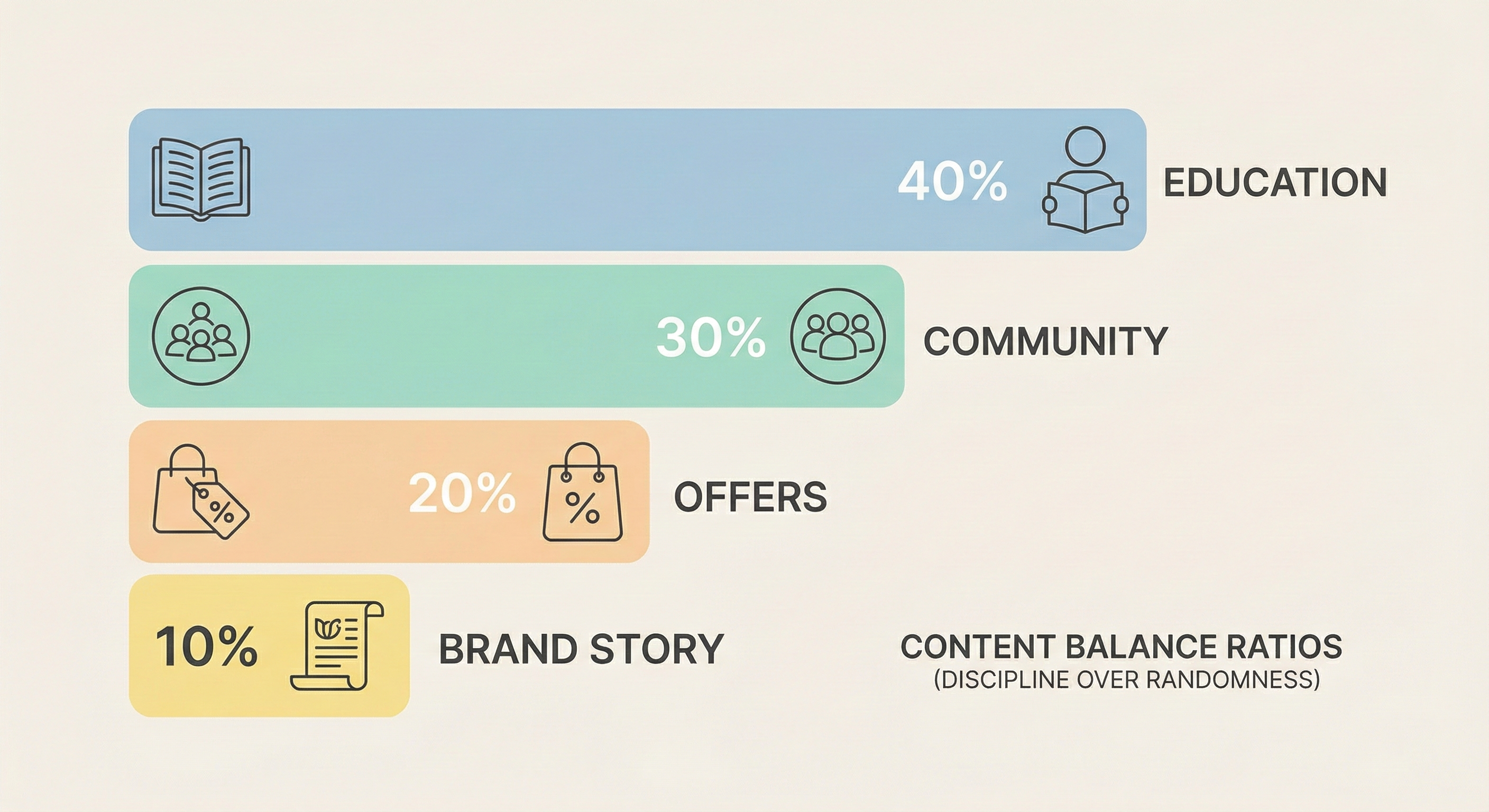
Random posting is anxiety-blind. Discipline converts fear into familiarity.
Forty percent of content must educate. This is how you become the giver - how to massage a baby, how to read ingredient labels, how to choose safely.
Thirty percent must validate through social proof. Real mothers, real unboxings, real voices.
Twenty percent can sell. But sell intelligently - bundles, milestone kits, preparedness framing.
Ten percent tells your story. Founders, values, sustainability. This connects, but it never leads.
Parents don’t follow brands for inspiration. They follow them for reassurance.
Conclusion
The cost of raising a child in urban India has crossed ₹45 lakhs. Combine that financial pressure with biological hyper-vigilance and you get a consumer who is actively looking for reasons not to buy.
Your job is to remove those reasons.
In the Indian baby care market, trust compounds. Fear converts faster than desire. And the brand that reduces anxiety most effectively wins - not just the transaction, but the relationship.