Mechanical Sympathy in a Disposable World: A Systems Approach to a 9-Year-Old Motorcycle
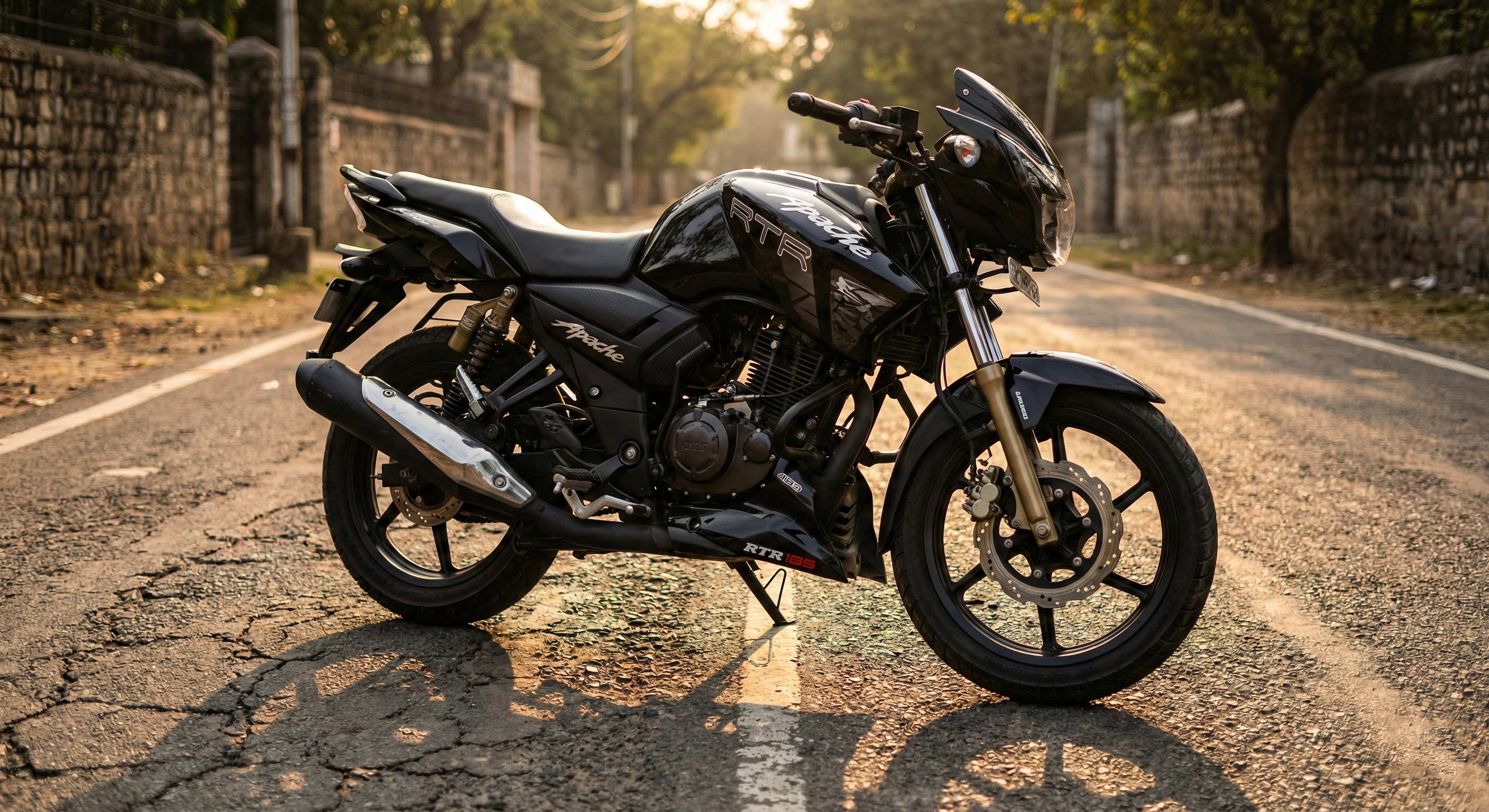
There are two ways to own a machine. You can outsource the responsibility and blindly trust the service stamps, or you can learn how the system breathes.
I’ve owned my TVS Apache RTR 180 ABS for nine years. It was my first motorcycle. It has outlived job transitions, the chaos of city traffic, late-night rides, and heavy phases of life. Today, it still idles cleanly, the gearbox remains precise, and the braking is progressive and controlled. There are no rattles, no electrical unpredictability, and no “it’s old now” excuses.
That longevity was not accidental. It was engineered.
Longevity in machines is not luck. It is controlled inputs, disciplined maintenance, and attention to tolerances.
The Dealership Model vs. The Ownership Model
For the first few years, I did what most owners do: authorized service, every interval, every bill paid without question. My average annual cost was roughly ₹10,000.
In the Indian authorized service ecosystem, you are paying for a procedural checklist, not deep mechanical troubleshooting. I audited my service bills and realized the parts cost a fraction of the total. Upwards of 60% of the invoice was arbitrary labor: Greasing (labor), Washing (labor), Polishing (labor), Chain Adjustment (labor).
Authorized doesn’t always mean thorough; it just means standardized. When I realized I understood the heartbeat of my bike better than the technician ticking boxes on a clipboard, I rebuilt my maintenance supply chain.
They follow checklists. They do not audit individual machine behavior deeply unless a clear fault exists. The moment your warranty ends, you face a choice: continue paying for standardized process, or start optimizing for mechanical precision.
I chose precision.
The Hybrid Strategy: Control Inputs, Delegate Execution
Today, my baseline annual maintenance cost averages ₹2,000–₹2,500 (excluding major periodic replacements like tires or chain-sprocket sets). The strategy is simple: I control the critical variables, and I outsource only what requires specialized tools or creates a mess.
The Controlled Variables:
- OEM Consumables: Clutch cables, oil filters, Break Pads and oil seals sourced from a trusted local distributor or Online
- Fluids: This is where you never cut costs. I exclusively run fully synthetic oil.
Dealerships often use mid-tier oil sourced in bulk. That makes business sense for their margins, but for me, oil is not a consumable cost—it is a longevity multiplier. By sourcing premium synthetic oil myself and paying a trusted local mechanic a flat labor fee for the drain and refill, I reduced my costs while drastically increasing my control over quality.
Ownership begins with controlling your supply chain.
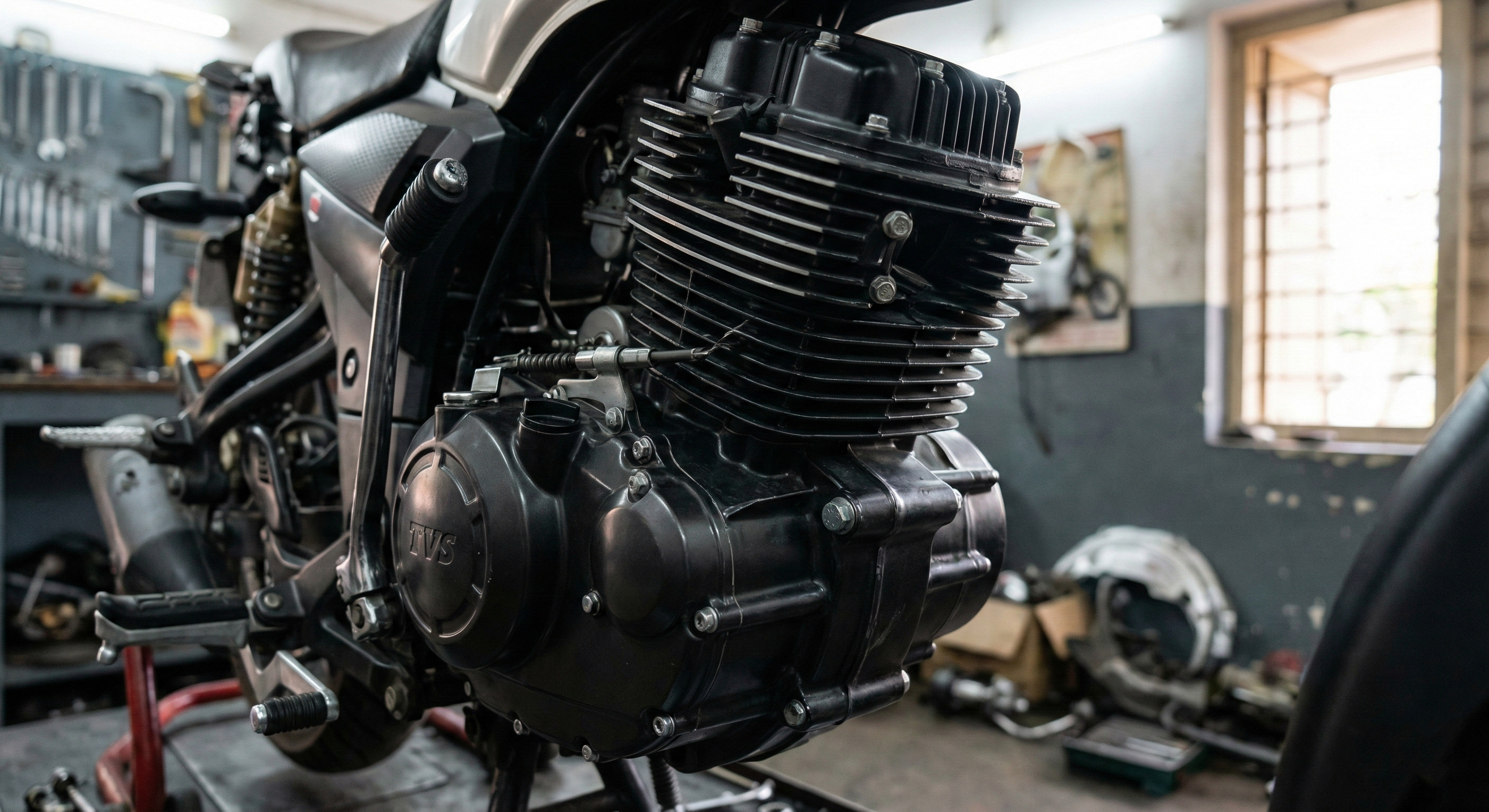
Control the inputs. The outputs stabilize.
Fluid Discipline: The Invisible Performance Variable
Every mechanical system relies on critical control loops. On a motorcycle, those loops are engine oil, brake fluid, clutch calibration, and chain lubrication. Ignore any one of these, and the machine degrades silently.
The first sign of degradation on my Apache was subtle. On cold mornings, the front brake felt slightly resistant. It wasn’t weak, just non-linear. The pads were healthy, the caliper was clean, and the ABS was fully functional.
The root cause was the hydraulic fluid.
Brake fluid (DOT 4) is hygroscopic. In humid Indian climates, it absorbs atmospheric moisture over time. This moisture lowers the boiling point and fundamentally changes the fluid’s compressibility characteristics, which directly alters the braking feel under pressure and heat.
It had been over a year since the last flush. After bleeding the lines and replacing the fluid, the brake response returned immediately—smooth, progressive, and predictable. Brake fluid is inexpensive. Ignoring it compromises your safety margins. That is the difference between basic maintenance and mechanical awareness.
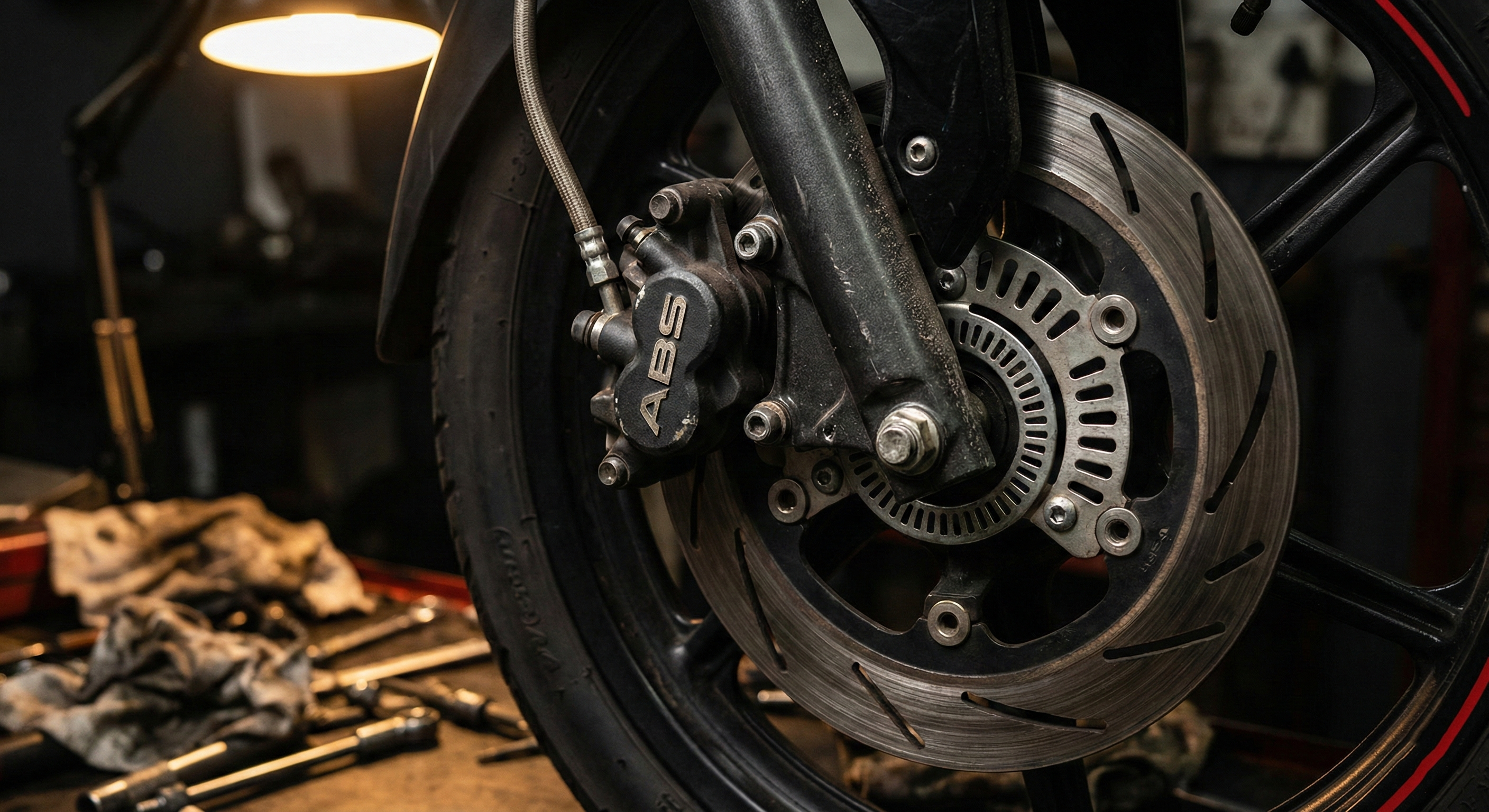
Safety margins shrink quietly before failure becomes visible.
Clutch Calibration: Millimeters Define Smoothness
Over time, I began noticing a slight jerk during 1st to 2nd gear shifts, an occasional false neutral, and inconsistent lever resistance.
The cable showed early fatigue, and replacement helped, but the real transformation came from hitting the exact tolerance for free play.
Optimal clutch lever free play is 3–5mm at the tip.
- Too tight → The friction plates remain partially engaged, leading to slip and premature wear.
- Too loose → Incomplete disengagement, resulting in harsh, clunky gear engagement.
My tactile reference gauge is the thickness of an old ₹5 coin. Slipping that coin into the lever gap ensures perfect tension. That single, millimeter-level adjustment restored the gearbox’s factory precision. Mechanical systems reward respect for tolerances.
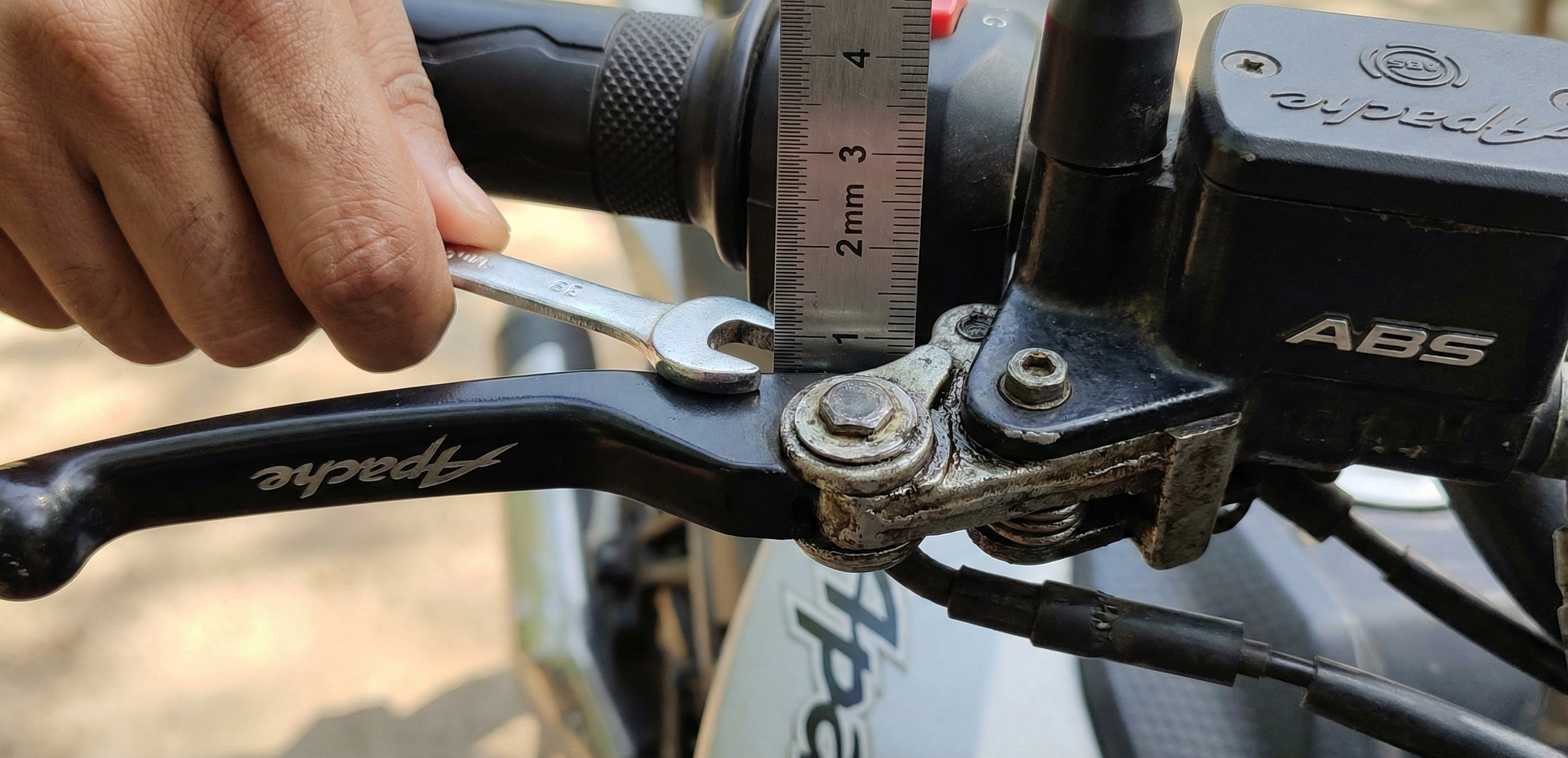
Mechanical smoothness is rarely dramatic. It is usually a tolerance issue.
Electrical Cascades: When a Battery Mimics Engine Trouble
Another phase brought a confusing set of symptoms: a rough idle at low RPM, slight jerkiness during slow movement, a weak electric start, and an intermittent ABS warning light.
My initial hypothesis leaned toward the ignition system, but the dual spark plugs were perfectly fine. The culprit was voltage instability.
Even older motorcycles depend heavily on stable voltage for ignition coil strength, starter motor torque, ABS controller operation, and lighting load balance. The battery had reached its exact end-of-life cycle, failing right at its 4-year warranty MTBF (Mean Time Between Failures) mark.
Authorized replacements previously cost over ₹3,000.
- The Optimized Fix: I purchased a superior battery online for ₹1,600 and installed it myself. I applied (₹50 packet) dielectric terminal grease to prevent voltage drops from corrosion.
Stable voltage instantly restored clean starts and eliminated all ABS errors. Electrical failures cascade quietly before they fail visibly.
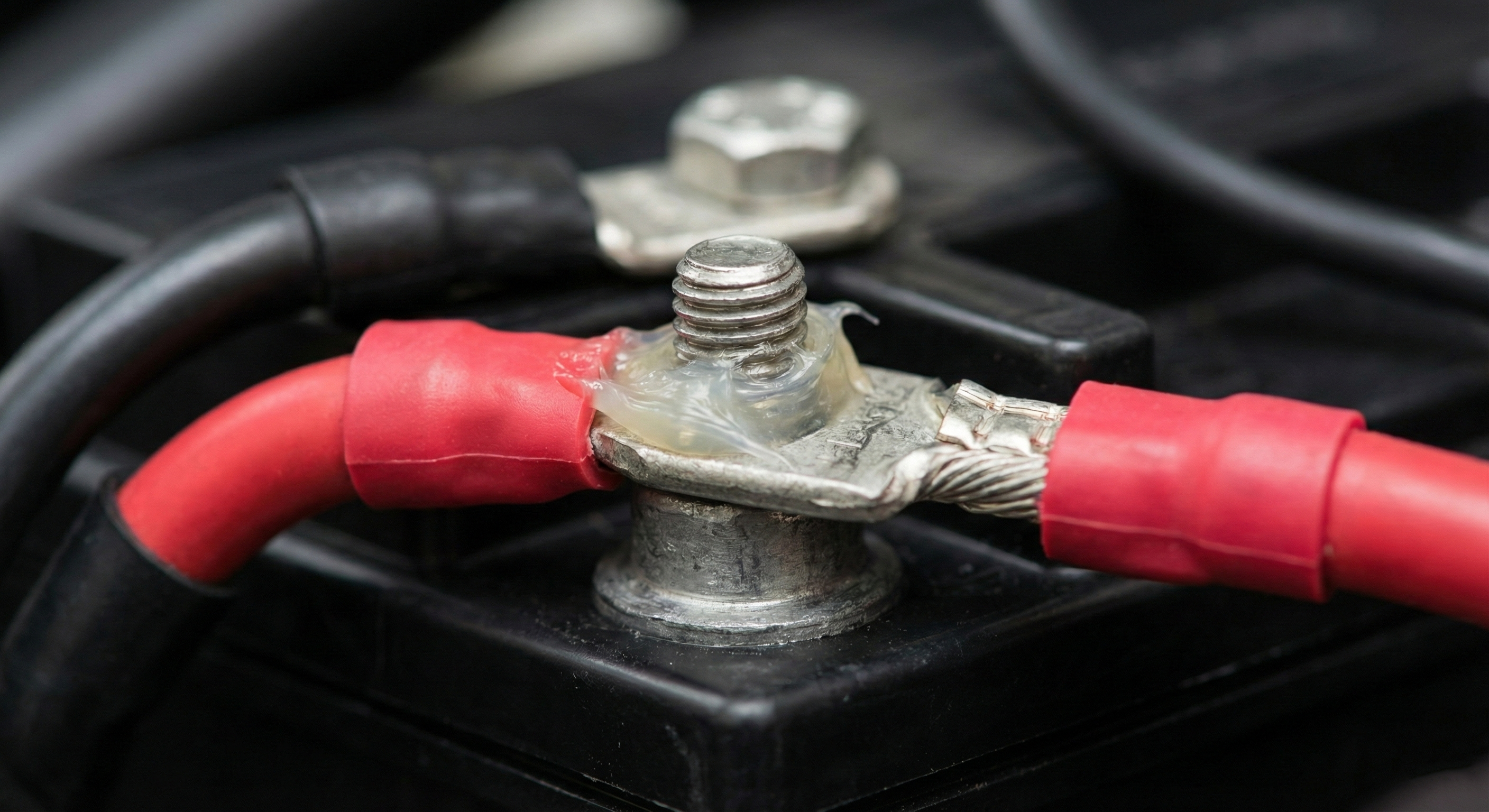
Electrical instability often disguises itself as mechanical trouble.
Contact Patches & Corrosion Management
Many riders wait until the tread disappears to change their tires. That is incomplete thinking.
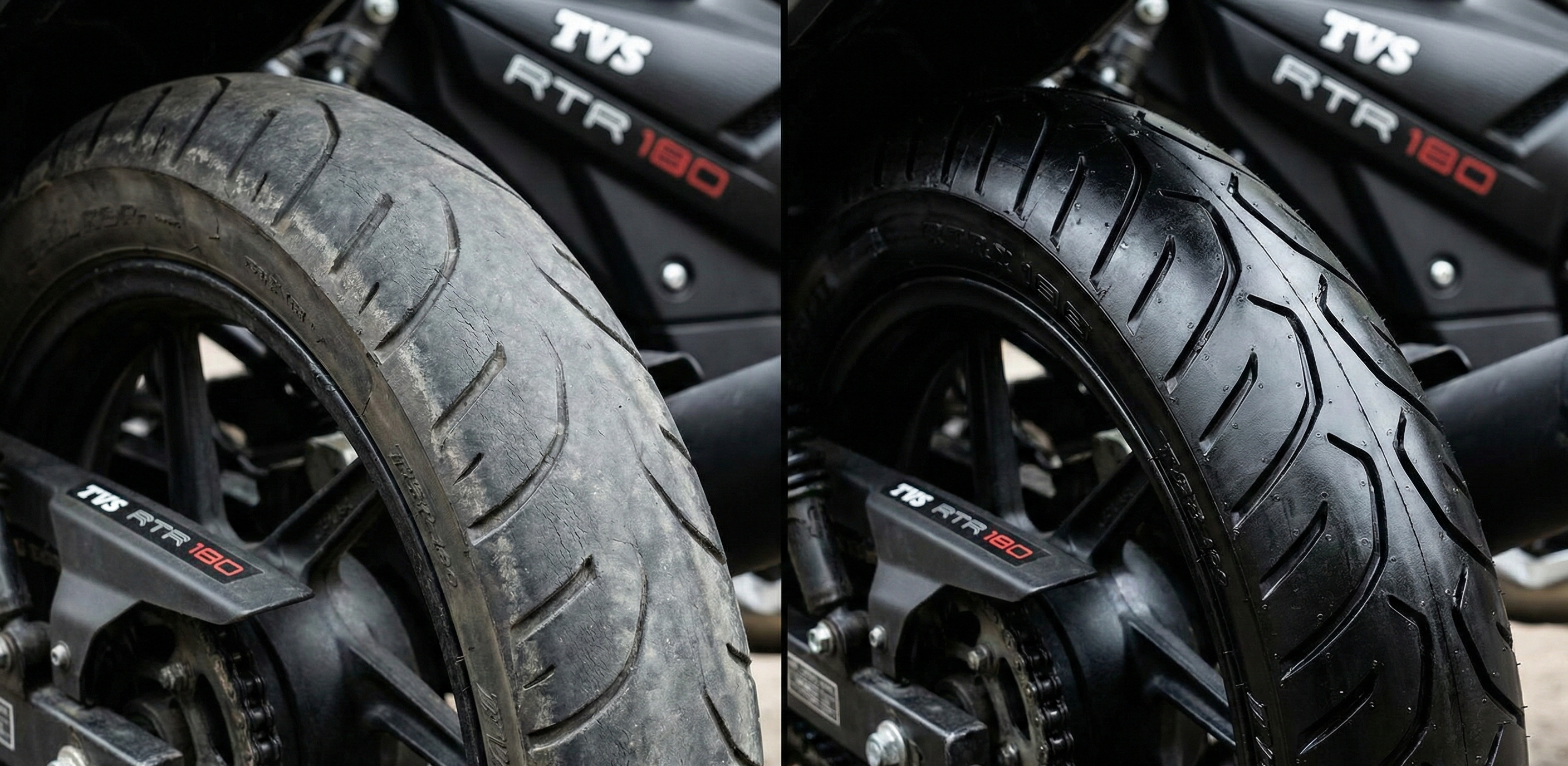
Grip is a matter of chemistry, not just geometry. Rubber compounds oxidize. Heat cycles harden their elasticity. UV exposure accelerates degradation. A tire can appear perfectly healthy with deep tread and still have compromised grip. Manufacturers recommend replacing tires after 4–5 years, period.
Mounting fresh rubber completely transformed the chassis dynamics: cornering confidence returned, vibrations dropped drastically, and braking response sharpened. The chassis didn’t change. The chemistry did.
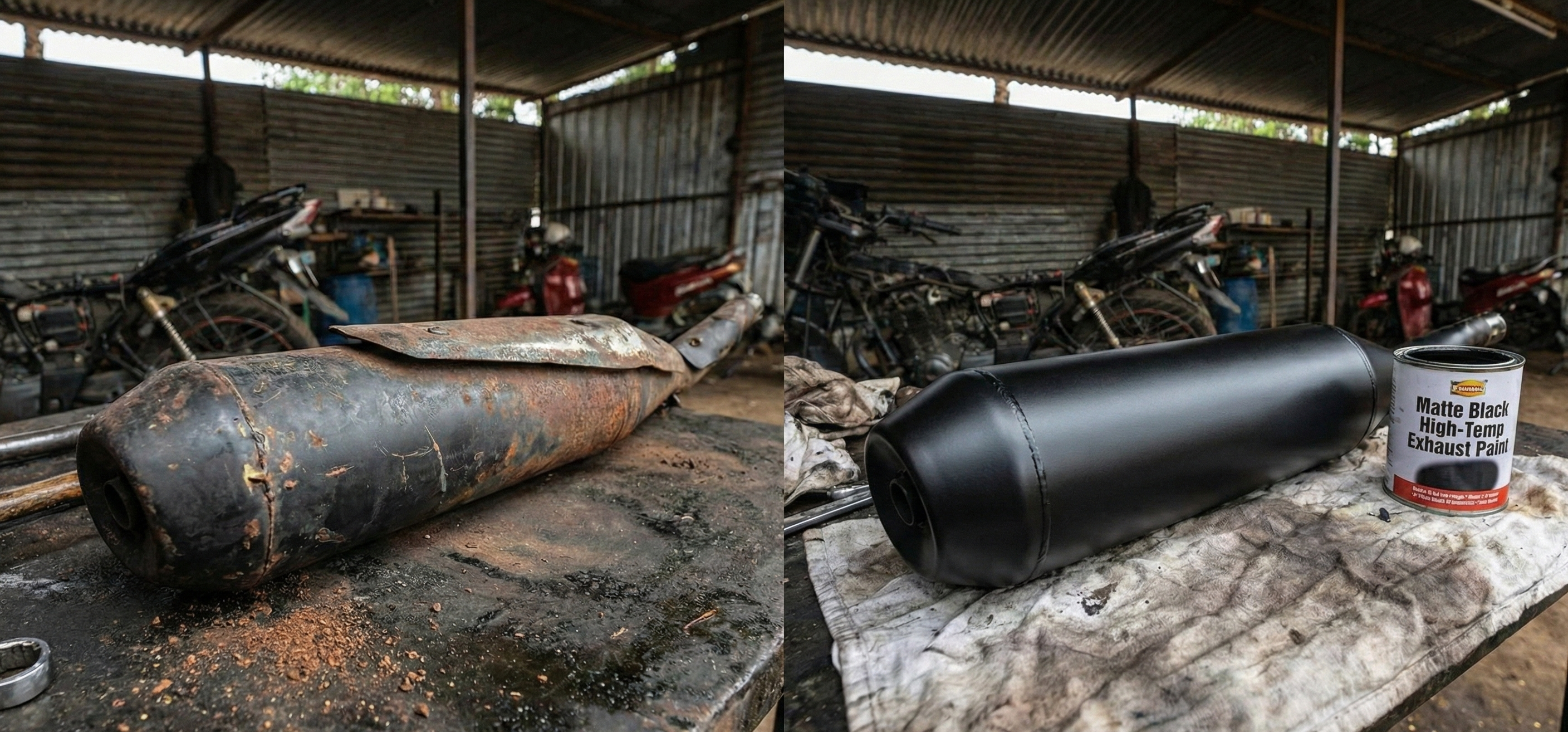
Strategic Cosmetic Control When surface rust appeared on the silencer, a replacement was unnecessary. I bought high-temperature exhaust paint, and professional prep and spray at a local garage. For under ₹1,000, I restored the factory appearance and halted the corrosion. Strategic ownership means distinguishing between structural failure and aesthetic decay.
Boundary Setting However, boundaries matter. I do not open the engine, split crankcases, attempt ABS internal repairs, or diagnose deep electrical faults without proper diagnostic tools. Own the strategy, but respect the complexity of the hardware.
The Psychological Shift: An Analog Reset
Over time, you transition from a passive user to an active owner. You start noticing micro-details: a shift in throttle response, a variation in idle sound, the consistency of the brake bite. These analog signals tell you far more than a computerized service invoice ever will.
A motorcycle is not just transport. It carries you through the chaos of traffic, through work stress, and through the heavy thoughts of a daily grind. Taking care of it isn’t a chore; it’s an analog reset for a digital mind.
When you spend your days building and optimizing complex systems, there is a profound, grounding joy in turning a wrench on your own machine.
Machines reward the people who pay attention to them. Once you cross the line from a passive rider to a mechanically aware owner, you never go back.
In a world optimized for replacement cycles, mechanical sympathy is rebellion.