From button-clickers to commerce engineers: the Shopify talent gap
Why hiring for UI skills fails platform-scale operations and what to hire for instead.

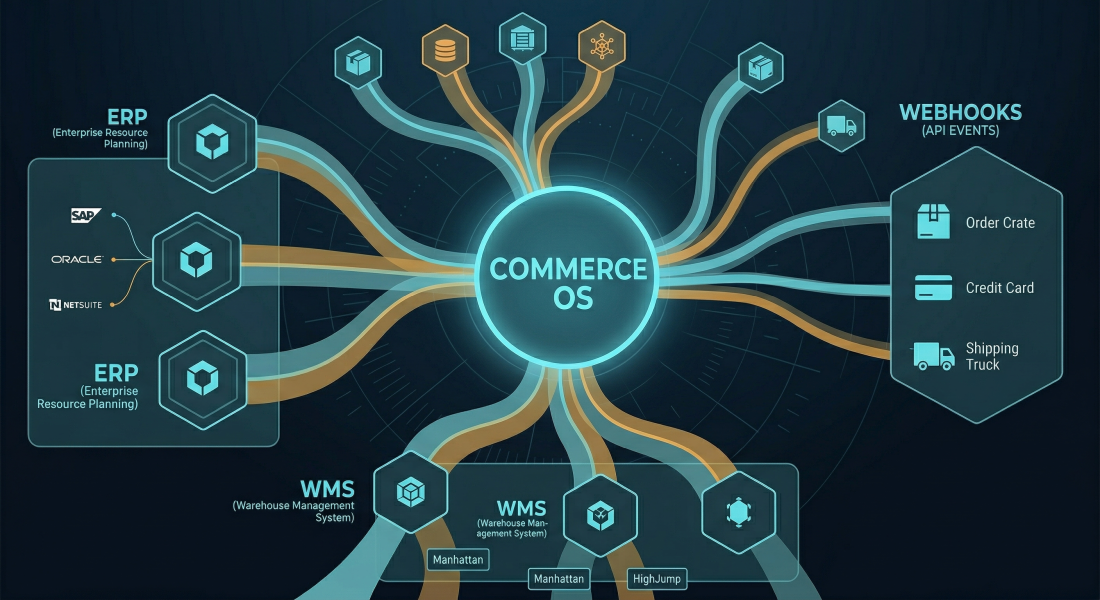
Shopify is not a store builder anymore. It is a commerce operating system: GraphQL and REST APIs, webhook-driven event flows, multi-location inventory with non-atomic reservation, Shopify Functions compiled to WASM, and an ecosystem of ten thousand applications sharing state across a distributed mesh.
The engineering surface area is comparable to a mid-scale distributed system, and the revenue stakes are proportional. Yet most hiring briefs for “Shopify developers” still screen for theme customisation and app configuration skills the output of a different era. That mismatch is exactly where revenue leaks.
The commerce talent gap is structural
The Shopify ecosystem produced a massive practitioner population by design. Low-friction onboarding, an App Store that handles most feature requests, and a thriving tutorial community lowered the entry barrier to near-zero. The result: thousands of capable UI operators who can configure the admin, install apps, and deliver visible UX changes and who genuinely struggle when the work moves below the admin surface.
This is not a quality problem with individual practitioners. It is a structural outcome of how the platform trained its ecosystem. When every capability gap has an App Store answer, the skill that gets exercised is app discovery and configuration, not integration design or failure-mode reasoning.
The cost surfaces at scale. An operator who cannot reason about webhook retry semantics, inventory race conditions, or ERP integration failure modes is not a Shopify developer working below their potential; they are the wrong hire for the role. Organizations typically do not discover this until a flash sale oversells three hundred units, a checkout conversion drop gets traced to a rogue third-party script, or an ERP silently stops receiving orders for two days.
Shopify as a distributed system
Understanding why systems thinking matters requires understanding what Shopify actually is at the data and API layer, not the admin surface.
Modern Shopify Plus is a distributed system with asynchronous data flows and shared state across multiple services. Its extension points span compiled WASM logic inside the checkout, event-driven automation via Flow, OAuth-authenticated app integrations, and REST/GraphQL APIs subject to rate-limit buckets and query complexity scoring.
The platform guarantees at-least-once webhook delivery, not exactly-once. Shopify retries failed deliveries up to nineteen attempts over forty-eight hours. When a sustained endpoint outage clears, the consumer may receive events from nearly two days prior in non-chronological order. Most UI operators do not know this is happening. They have no monitoring in place, no alerting, and no understanding of the downstream consequence when the ERP stops receiving fulfilment events. That is not a gap in tooling; it is a gap in the personnel.
Shopify’s inventory check at checkout is non-atomic. Under high concurrency, even correctly configured oversell prevention produces race conditions that require architectural mitigation, not admin fixes. The distinction matters because the failure is invisible in the admin until customers start complaining.
If your team cannot reason about event sequencing, idempotency, retry logic, and state divergence across your integration graph, you do not have a Shopify team. You have a risk centre.
Two archetypes, one misunderstood gap
The talent market conflates two meaningfully different capability profiles under the same “Shopify developer” label.
The Capability Matrix
| Capability Dimension | The UI Operator (“Button-Clicker”) | The Commerce Systems Engineer |
|---|---|---|
| Primary Competency | HTML, CSS, Liquid. Focuses on visual execution and admin configuration. | Event-driven architecture, API governance, WebAssembly Functions. |
| System Comprehension | Thinks in “screens.” Treats external systems as black boxes; assumes data simply “syncs.” | Thinks in “systems.” Maps end-to-end data flows, enforces idempotency, designs retry paths. |
| Failure Handling | Escalates issues reactively. Relies heavily on app vendor support teams. | Maintains runbooks. Monitors webhook delivery rates and integration lag. Anticipates failure. |
| Accountability | Measures output via tickets closed, apps installed, and features shipped. | Owns business KPIs: conversion rate, oversell incidents, refund latency, and fulfilment SLAs. |
The UI operator
The UI operator navigates the admin with fluency, installs and configures apps correctly, implements theme customisations, and delivers visible output. For low-complexity operations and early-stage merchants, this is appropriate and valuable.
Where they fail is below the admin surface. Ask them to design the integration architecture for a Shopify-to-NetSuite order flow, and they describe connecting the systems via a popular integration app without engaging event ordering, failure modes, or reconciliation. They measure their own success in tickets closed. That means the organisation never gets outcome ownership from someone in this role.
The commerce systems engineer
The commerce systems engineer combines software engineering discipline, integration architecture skills, and operational accountability for measurable business metrics. They think in systems, reason about trade-offs, and design for failure not hope it does not happen.
The defining behaviours are observable:
- They produce architecture diagrams and data-flow maps, not just working configurations. Organisations whose Shopify knowledge lives entirely in tribal memory are uniquely exposed to key-person risk.
- When evaluating a new app, they audit the API scopes it requests, the JavaScript payload it adds to the checkout path, and the coupling it introduces with existing webhook consumers before installing it.
- When an incident occurs, they trace the event sequence: which location was allocated, what the inventory level was at each step, whether a concurrent API write contributed to the discrepancy. Then they propose a preventive architectural change, not a settings adjustment.
What real Shopify engineering looks like
The capability difference surfaces across four domains that every serious Shopify operation eventually confronts.
Hardening the purchase path
Shopify owns the core checkout infrastructure. What it does not protect against is the accumulated performance weight of everything merchants bolt onto it: analytics scripts, personalisation tools, marketing pixels, and third-party payment widgets.
The operator approach is to install the app, confirm it works visually, and close the ticket.
The systems engineer approach treats every added script as suspect until validated via Core Web Vitals, network waterfall analysis, and LCP/INP deltas measured against a real-user baseline. They know that a 0.4% drop in checkout conversion is real lost revenue, and they can trace the cause to a specific script addition within hours, not days. The same discipline applies to Checkout Extensibility: an engineer ships the feature and explicitly owns what happens to conversion after it lands.

Multi-location inventory and concurrency
Managing accurate inventory across flagship stores, warehouses, 3PLs, and dropship suppliers is one of the most mechanically demanding commerce domains.
The operator approach: install a polling app that batch-updates stock every 5–15 minutes. It works until peak traffic, at which point multiple orders reserve the same units between polls, the polling behaviour itself hits API rate limits (429 errors), and oversell emails start arriving from fulfillment.
The systems engineer treats this as an architecture problem. Polling is replaced with event-driven webhook flows. Safety buffers are applied to high-velocity SKUs. The integration layer is designed so that the same webhook event delivered twice produces the same inventory outcome, not a duplicate decrement. The engineer designs against oversells before the sale, rather than discovering them after.
Integration boundaries and ERP data flow
Enterprise Shopify environments never exist in isolation. Every serious operation integrates with an ERP, a WMS, a 3PL, and a financial ledger.
The canonical failure: hard-coded point-to-point API calls from the storefront directly to the ERP. During flash sales, synchronous call volume spikes, throttles the ERP, and the failure cascades across both systems simultaneously. No one designed for what happens at 10× scale.
The systems engineer defines explicit ownership boundaries. The storefront captures intent. Everything downstream ERP updates, WMS fulfilment, inventory reconciliation happens asynchronously through governed workers and message queues (iPaaS). Retried webhooks cannot create duplicate orders because the integration was designed to be idempotent from day one.
Metric ownership, not ticket ownership
The most culturally distinctive property of the commerce systems engineer is metric ownership. They are accountable for the business outcomes their architecture affects.
| Metric | What it signals |
|---|---|
| Checkout Conversion Rate | Health of the purchase path (scripts, extensions, UX) |
| Oversell Incident Rate | Inventory system reliability under concurrency |
| Integration Error Rate | Webhook and ERP pipeline health |
| Fulfilment SLA Adherence | Order-to-ERP-to-3PL pipeline end-to-end |
| Refund Latency | Payment and gateway integration quality |
| Webhook Delivery Lag | Integration observability and queue health |
An operator measures tickets closed. An engineer owns these numbers and links every architectural decision back to them.
The evaluation framework
Years of “Shopify experience” is a weak signal. An operator with seven years configuring a single small merchant store is less qualified for a systems role than an engineer with three years operating a high-volume Plus environment under real production load.
Avoid these common hiring anti-patterns:
- Over-indexing on platform tenure: Job briefs requiring “5+ years Shopify experience” attract people who have been clicking the admin for five years, not people operating distributed systems. Filter for complexity and accountability.
- Conflating capability profiles: A talented Liquid theme developer may be a poor match for an ERP integration design role. A single “Shopify developer” job description blending all profiles attracts candidates who match on keywords but fail on the hard requirements.
- Ignoring incident history: Hiring panels that focus exclusively on coding exercises miss the ownership dimension. Ask: “What is the most significant production incident you personally managed, and what did you change after it?”
Scenario 1: Integration data-flow design
Prompt: “We run Shopify Plus, NetSuite, and a 3PL. Walk me through the architecture for the full order lifecycle. Where can it fail, and how do you recover?”
- Weak signal: Describes connecting the systems via an App Store integration without engaging event ordering or failure modes.
- Strong signal: Immediately discusses event ordering, idempotency keys, dead-letter queues, webhook retry policies, and how to protect Shopify uptime when the ERP degrades.
Scenario 2: Concurrency and locations
Prompt: “We have four warehouse locations and an active retail network. We’re running a product drop at 10× normal peak traffic. How do you design the system to prevent oversells?”
- Weak signal: Suggests manually adjusting inventory in the admin before the event or toggling “continue selling when out of stock”.
- Strong signal: Discusses safety stock buffers, real-time webhook-driven decrements vs. API polling, and race condition handling across POS and 3PLs.
Scenario 3: Incident response
Prompt: “Checkout conversion dropped 0.6% yesterday, correlated with a new marketing app install. Some orders also failed to reach the ERP. Walk me through your investigation.”
- Weak signal: “I would contact the app vendor’s support team.”
- Strong signal: Outlines a structured investigation: Core Web Vitals analysis, network waterfalls to isolate script blocking, checking Shopify webhook delivery logs, and verifying middleware queue backlogs.
Role taxonomy: stop conflating three distinct tiers
The root cause of most Shopify talent failures is hiring a “Shopify developer” and expecting them to operate at all capability tiers simultaneously.
Tier 1 – Shopify Implementer: Administrative configuration, merchandising, promotion setup. Executes high-volume tasks inside the admin. Not accountable for integration design.
Tier 2 – Shopify Engineer: Software engineering rigour. Builds custom applications, writes reliable webhook handlers, implements Shopify Functions, and integrates APIs. Not yet responsible for full architectural topology.
Tier 3 – Commerce Systems Architect: Owns the full technical topology. Designs integration boundaries, enforces idempotent data flows, governs iPaaS, leads incident response, and holds ultimate accountability for uptime and commercial metrics.
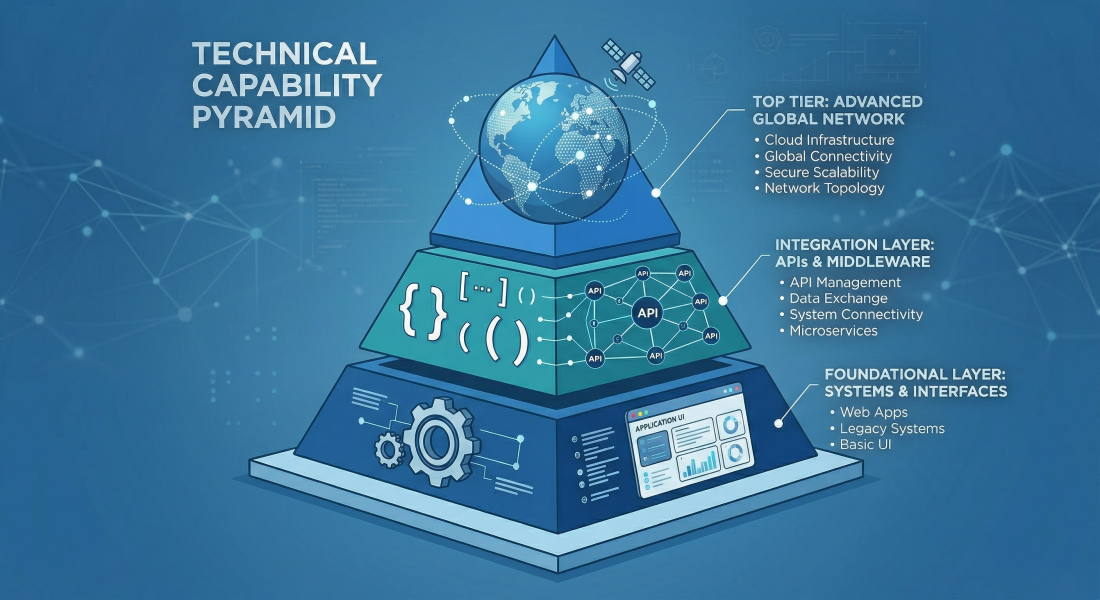
Most organisations hire Tier 1 and expect Tier 3 output. That is a self-inflicted root problem.
The four-phase path to closing the gap
Organisations that recognise this problem benefit from a phased programme:
- Audit: Map every installed app (API scopes, performance impact) and every external integration (data flows, failure handling). Synthesise into a risk-ordered inventory of failure modes by revenue impact.
- Role clarity: Map the existing team’s capabilities honestly against the three tiers. Define what “senior” means in your specific context and establish clear ownership interfaces with operations and finance.
- Architecture hardening: Target the highest-consequence integrations first. Add event processing monitoring (lag, error rate), dead-letter queues, idempotency guarantees, and runbooks. Run a structured checkout performance audit using real-user monitoring data.
- Embed metric ownership: Assign specific Shopify-linked KPIs to engineering roles. Run monthly blameless incident reviews and quarterly architecture reviews to evaluate technical risk reduction.
Systems thinking and operational ownership do not scale down as the tooling scales up; they become more valuable as the blast radius of a bad architectural decision grows. Treat your Shopify stack as the critical operating infrastructure it is, and build the team capable of running it.
Sources and references
- Shopify Developer Documentation (Platform APIs, Webhooks, Functions, and Extensibility)
- Shopify Annual Report and Investor Relations
- Shopify Plus Partner Programme
- Google Web Vitals: Essential metrics for a healthy site
- Google Search Central: Core Web Vitals and their impact on conversion rates
- McKinsey Digital: The State of AI and Automation in E-Commerce Operations
- Stack Overflow Developer Survey 2023: E-commerce and Platform Specialisation Data
- Deloitte Insights: Engineering Talent Shortages in Technology-Intensive Sectors
- Recharge Payments: State of Subscription Commerce Report
- Klaviyo: E-commerce Benchmarks Report (Conversion, Retention and Platform Performance)
- Triple Whale: DTC Benchmarks and Platform Performance Data
- Industry Reports: Gartner Market Guide for Digital Commerce Platforms (2023), Forrester Consulting: Total Economic Impact of Shopify Plus (2023), Accenture Strategy: Talent in the Digital Economy (2023).