The 100-Store Death Spiral
Why retail scaling fails, why complexity compounds faster than capability, and why modern retail behaves like a distributed systems problem.
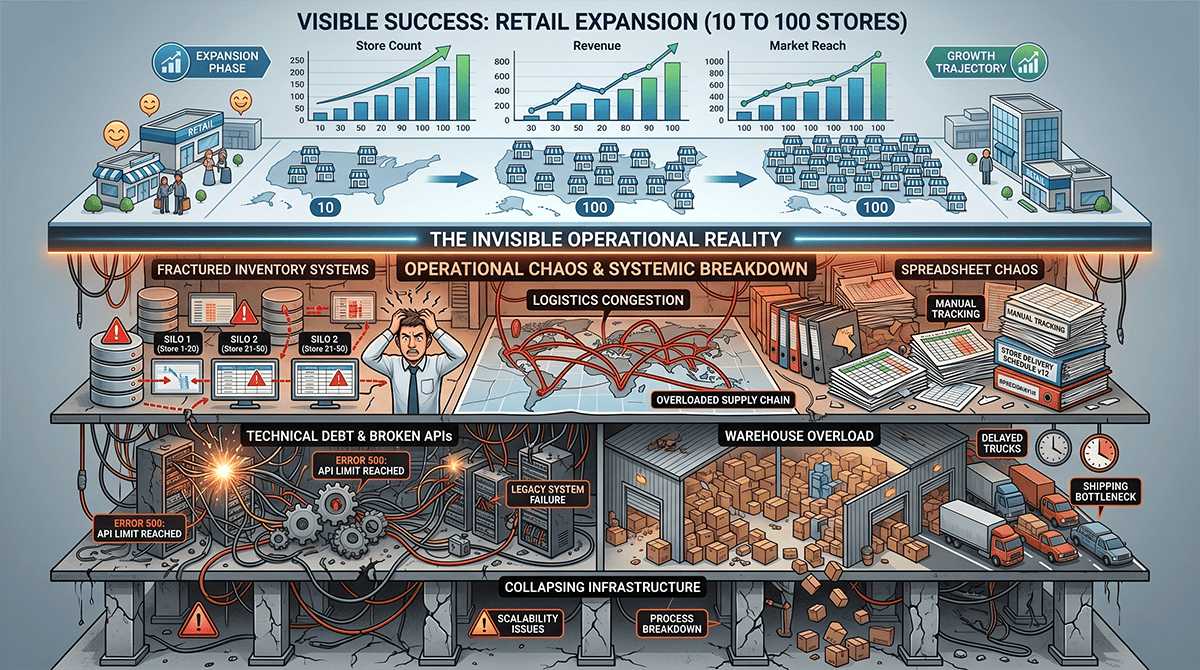
Retail brands rarely collapse because customers stop buying. They collapse because operational complexity compounds geometrically while organizational capability grows linearly. At a certain threshold of scale, modern retail ceases to be a traditional storefront expansion exercise and fundamentally transforms into a distributed systems coordination problem.
Retail Is No Longer a Storefront Industry
Historically, a retailer’s competitive advantage depended heavily on merchandising, location dominance, procurement leverage, and visual branding. That operating model is rapidly deteriorating. Modern retail survival increasingly depends on distributed systems architecture, real-time inventory intelligence, fulfillment orchestration, and supply-chain topology. Operating a profitable retail network at scale requires managing data consistency, decision latency, and infrastructure synchronization across hundreds of disjointed nodes.
The Core Scaling Misconception
Most executives incorrectly assume that opening more stores directly equals more scale. This is a category error. New stores increase operational load, state transitions, and synchronization surfaces. They do not create operational leverage by themselves. True scaling requires infrastructure that can absorb concurrency without losing inventory truth, service levels, or margin discipline. Expansion without upgrading the underlying systems architecture creates systemic operational debt, and that debt compounds invisibly until the organization becomes mathematically difficult to coordinate.
More Stores ≠ More Scale
What scaling actually requires is less theatrical and more demanding:
- synchronized inventory and order state,
- bounded operational latency,
- controllable exception rates,
- stable unit economics,
- clear ownership of system-of-record domains.
The Four Stages of Retail Collapse
Most retail organizations follow a predictable structural lifecycle. What changes between stages is not merely store count. It is the number of concurrent inventory mutations, reconciliation paths, and operational dependencies the business is forced to manage.
Stage 1: Founder-Controlled Growth (The Monolith)
At small scale, manual oversight functions like a tightly coupled monolith. The founder directly manages replenishment, merchandising, procurement, and pricing exceptions. Spreadsheets, WhatsApp coordination, and tribal knowledge are sufficient because network latency between problem detection and decision-making is effectively zero, and the business has not yet introduced meaningful concurrency.
graph TD
    A[Limited Store Footprint] --> B[Low SKU and Vendor Concurrency]
    B --> C[Founder as Control Plane]
    C --> D[Fast Exception Resolution]
    D --> E[Apparent Operational Stability]
This stage looks healthy, but it is healthy for the same reason a small monolith can look healthy: there are not enough parallel writes, edge cases, or asynchronous dependencies to expose the architecture.
Stage 2: Hyper-Expansion (Concurrency Limits)
The organization scales aggressively, adding stores, SKUs, vendors, warehouses, and geographies in parallel. Revenue acceleration is usually misread as proof of successful scaling. In reality, the organization is increasing the volume of concurrent state changes across inventory, replenishment, fulfillment, pricing, and returns faster than it is increasing its architectural intelligence.
graph TD
    A[Store Expansion] --> B[SKU Expansion]
    B --> C[Vendor Expansion]
    C --> D[Warehouse Expansion]
    D --> E[Geographic Expansion]
    E --> F[Operational Exceptions Multiply]
    F --> G[Coordination Overhead Rises]
This is the stage where early-growth processes become liabilities. Centralized approvals, manually reconciled reports, and loosely coupled systems can still function, but only by forcing teams into constant intervention.
Stage 3: Spreadsheet Purgatory (Batch Processing Failure)
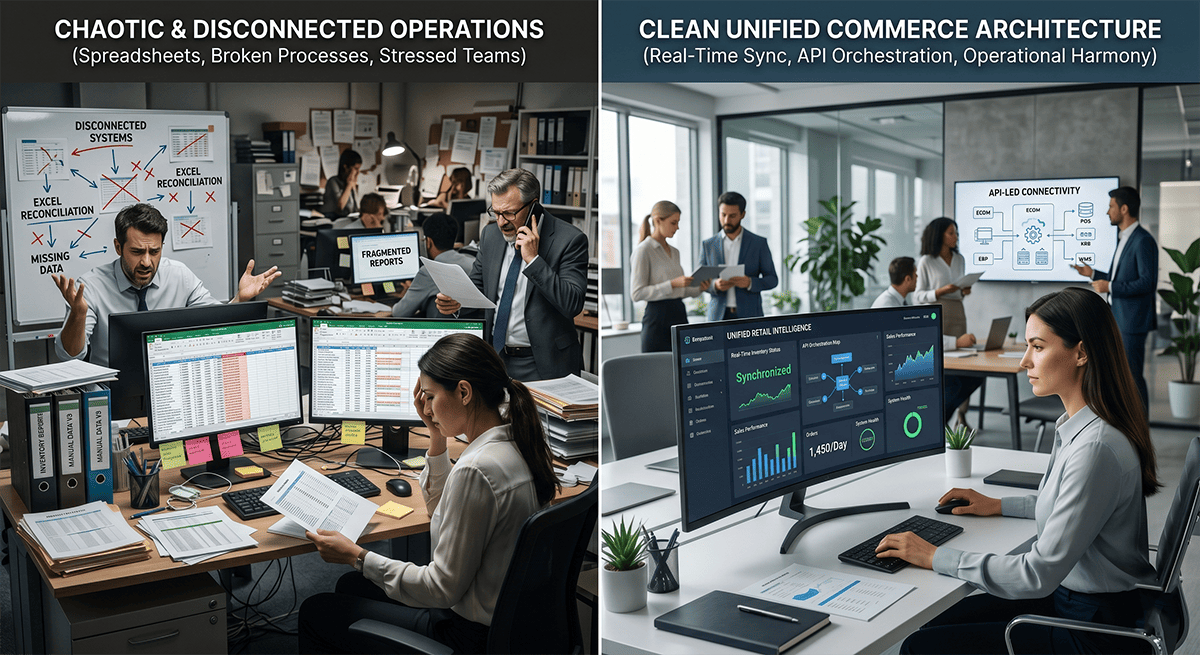
This is where legacy systems begin breaking apart under load. The organization is now trying to operate a distributed network using legacy POS systems, nightly ERP exports, fragile connectors, and manual reconciliation. The core problem is not merely tooling quality. It is architectural mismatch. A distributed business is being operated as if state can still be safely serialized into overnight files.
graph TD
    A[POS Transactions] --> B[Batch Export Queue]
    C[Warehouse Movements] --> B
    D[Marketplace Orders] --> B
    B --> E[ERP Import Window]
    E --> F[Spreadsheet Reconciliation]
    F --> G[Email and Call Based Exceptions]
    G --> H[Conflicting Operational Truth]
By relying on batch updates, the organization loses real-time inventory truth. Analysts devolve into data janitors trapped in endless reconciliation loops. The business operates on conflicting reports, delayed visibility, and email-based operations, leading to constant firefighting. Leadership often remains blind to this stage because top-line growth obscures the collapsing foundation.
The distinction between batch processing and streaming matters here. In a batch world, the organization learns what happened after the operational window has already closed. In a streaming world, the system reacts as state changes occur. That difference is the difference between preventing a problem and reconciling it.
Stage 4: Systemic Failure (The CAP Theorem Reality)
Eventually, operational complexity exceeds organizational capacity, resulting in a systemic collapse of unit economics. At this point the business is forced into the same trade-offs every distributed system faces under partition.
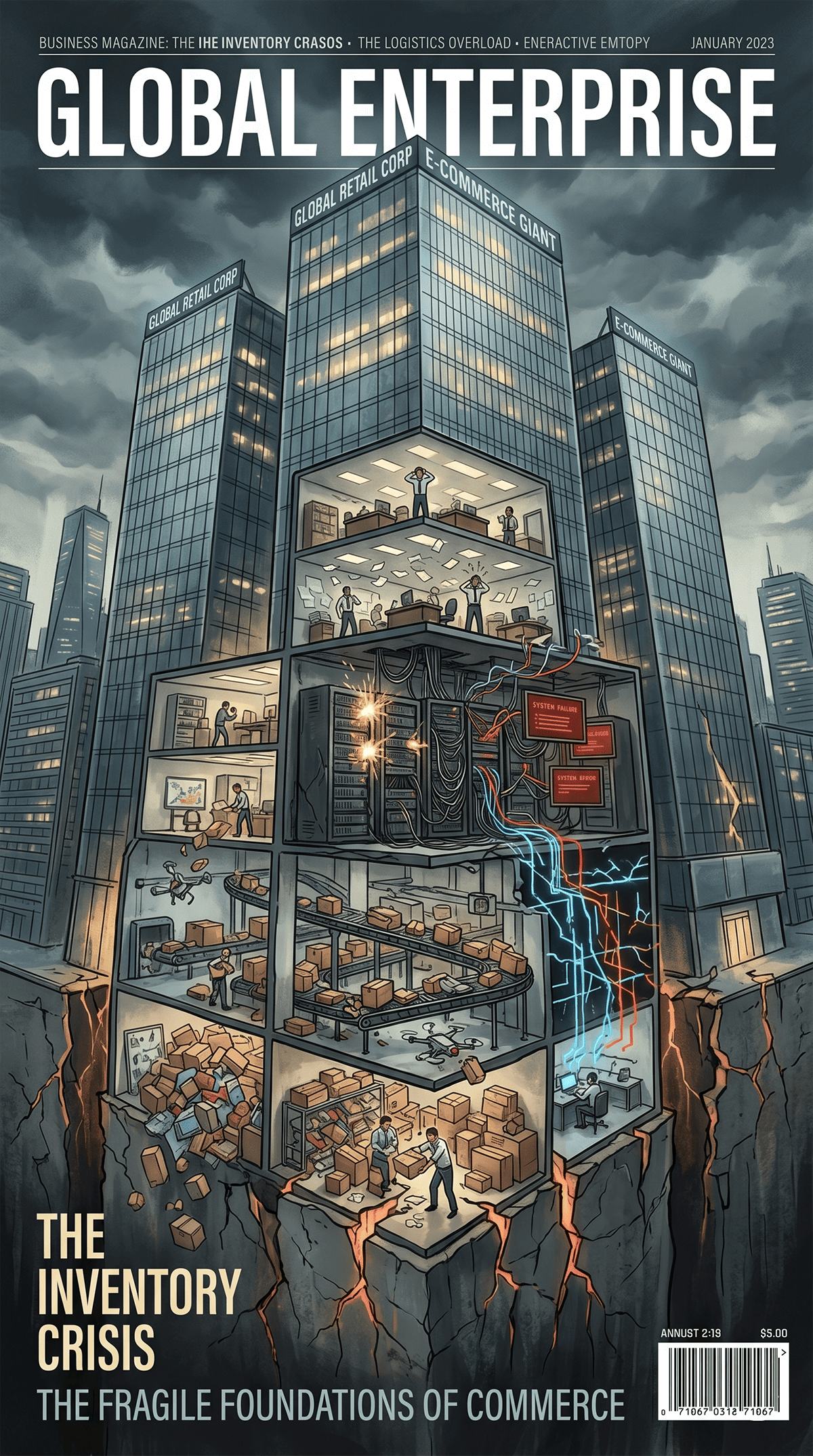
In distributed systems, the CAP theorem states that when network partitions occur, a system cannot simultaneously maximize consistency and availability. Retail networks live with partitions as a normal condition: store syncs fail, integrations lag, physical counts drift, and batch jobs hang or complete out of order. When a store, warehouse, and OMS disagree on stock, the organization must choose between:
- prioritizing consistency by holding or locking inventory, which reduces availability and conversion,
- or prioritizing availability by allowing order capture on stale state, which creates stockouts, split shipments, cancellations, reverse logistics, and customer distrust.
graph TD
    A[Partition Between Node and OMS] --> B{Choose Trade-Off}
    B -->|Consistency First| C[Lock Inventory]
    C --> D[Lower Oversell Risk]
    C --> E[Higher Bounce and Lost Conversion]
    B -->|Availability First| F[Allow Checkout on Stale State]
    F --> G[More Orders Captured]
    F --> H[More Cancellations, Returns, Margin Loss]
At this point, growth itself becomes the mechanism of destruction. Every new node increases the probability of stale reads, conflicting writes, and margin-destroying exception flows.
The 100-Store Inflection Point
The 100-store threshold is not a symbolic milestone. It is an architectural breaking point. Below this threshold, human coordination can brute-force system inefficiencies. Beyond it, the business irrevocably transforms into a distributed network in which state synchronization, inventory reservation, node-level fulfillment, and replenishment timing cannot be safely handled through managerial heroics.
The exact centralized decision-making processes that enabled early growth become destructive bottlenecks. Warehouses overload, centralized decision-making slows, SG&A expands, and fulfillment latency increases. Human intervention can no longer compensate for weak state propagation across 100 or more nodes.
Complexity Does Not Scale Linearly
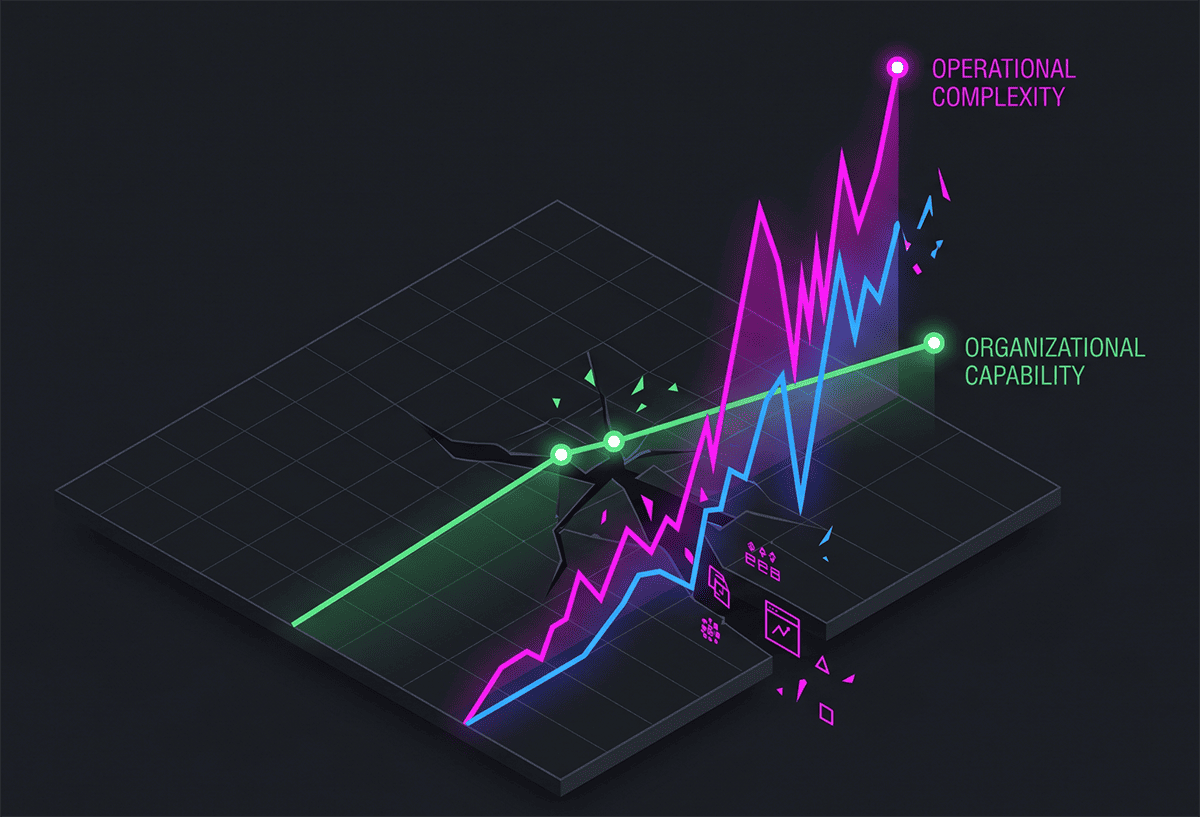
This is the single biggest misunderstanding in retail operations. Leadership assumes operational costs scale linearly with revenue. In reality, complexity grows geometrically because every added node introduces new combinations of failure, coordination, and data movement.
A seemingly harmless decision, such as adding one new SKU, localizing packaging, introducing another warehouse node, or onboarding another marketplace, creates cascading cross-dependencies across:
- procurement,
- warehousing,
- forecasting,
- replenishment,
- fulfillment,
- transportation,
- reporting,
- returns,
- analytics.
This is operational entropy: the silent accumulation of organizational disorder as the number of interacting components grows faster than the mechanisms available to govern them.
Complexity Cost: The Hidden Tax
Traditional accounting systems fail at scaled retail because they recognize fixed and variable cost but largely ignore Complexity Cost. Complexity Cost includes coordination overhead, exception handling, data reconciliation, operational disputes, human latency, and system synchronization failures. Those costs hide inside SG&A, fulfillment leakage, inventory buffers, and management overhead, which is why many retail organizations mistake revenue growth for economic improvement.
The Margin Illusion
A company can grow from 10 stores to 100 stores, or from INR 10 crore to INR 100 crore in revenue, while actual profitability deteriorates. Operational friction rises, inventory inefficiency compounds, management layers expand, and customer experience degrades around the edges. The company becomes larger externally while becoming structurally weaker internally.
The Whale Curve Problem
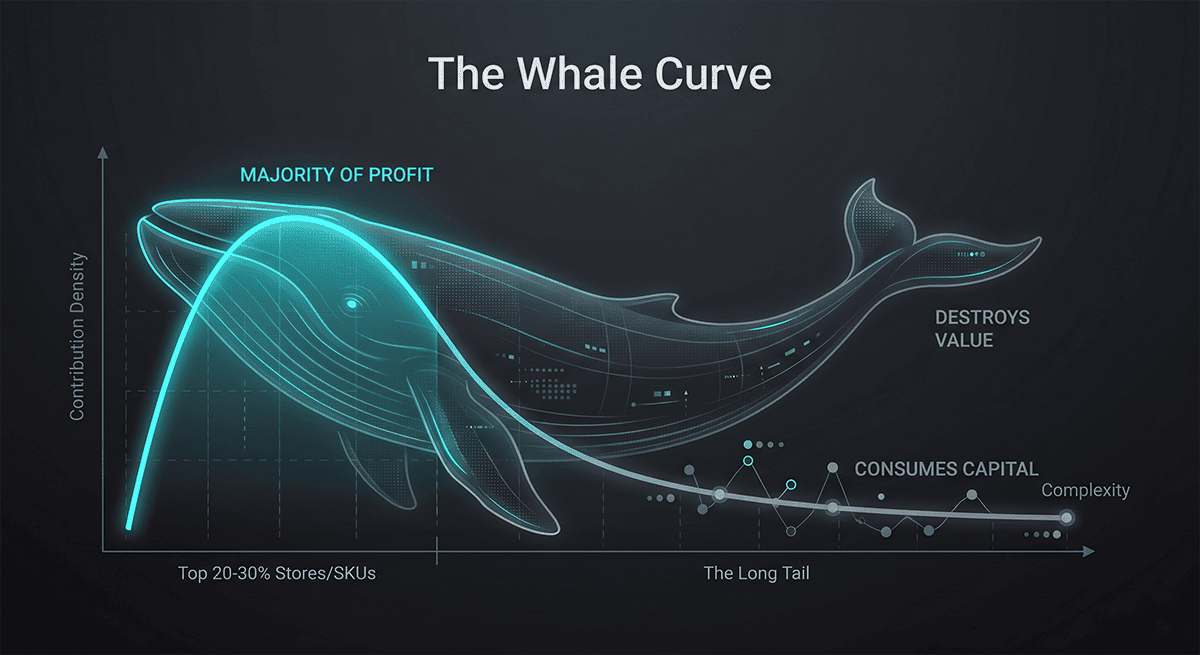
One of the most important realities in scaled retail economics is the Whale Curve. A small percentage of stores and core SKUs generate the majority of enterprise profit. The long tail consumes capital, absorbs replenishment effort, complicates forecasting, and creates operational surface area that often destroys more margin than it contributes.
graph TD
    A[Top 20 to 30 Percent Stores and Core SKUs] --> B[High Contribution Margin]
    C[Middle Layer] --> D[Operationally Neutral]
    E[Long Tail] --> F[Capital Consumption]
    F --> G[Forecast Noise]
    G --> H[Complexity and Margin Destruction]
The executive mistake is optimizing for revenue instead of contribution density. In a poorly governed network, the long tail is not just unproductive. It is anti-productive.
Retail Unit Economics: The Scaling Gate
Retail scaling must obey strict unit-economic constraints, and those constraints are directly governed by systems architecture. Fulfillment latency, promised-delivery accuracy, stock precision, and order-routing quality all have direct effects on conversion rate, repeat purchase rate, cancellation rate, and therefore CAC.
if (CAC > LTV / 3) or (Payback_Period > 12 months):
    halt_expansion()
    fix_unit_economics()
else:
    scale_network()
The architectural link to economics is concrete:
- lower geographic fulfillment latency improves conversion and reduces cart abandonment,
- better inventory accuracy reduces cancellations and paid-acquisition waste,
- better node-level order routing reduces split shipments and gross-margin leakage,
- better replenishment cadence improves in-stock rate on profitable SKUs,
- better event visibility shortens exception resolution time and reduces support load.
Healthy scaling still requires LTV:CAC >= 3:1 and a payback period below 12 months, but those numbers are downstream outputs of system quality. A chain with poor inventory consistency effectively taxes its own marketing budget because traffic is being bought into a fulfillment network that cannot reliably keep its promise.
SG&A and The Leviathan Effect
Selling, General, and Administrative expenses determine whether scale is structurally healthy. For multi-category retail, SG&A must remain between 15% and 30%. Above this threshold, operational leverage is dead. What replaces it is a coordination tax: duplicated roles, approval layers, reconciliation teams, manual exception workflows, and executive time consumed by problems the system should have absorbed by design.
Retail leaders often assume more scale automatically creates efficiency. Initially, this is true. Eventually, coordination costs exceed scale benefits. This is the Leviathan Effect. Symptoms include overloaded distribution centers, regional inventory mismatch, operational congestion, and duplicated management layers. The organization does not become more efficient with size; it becomes too large to coordinate efficiently.
The Modern Retail Architecture Stack
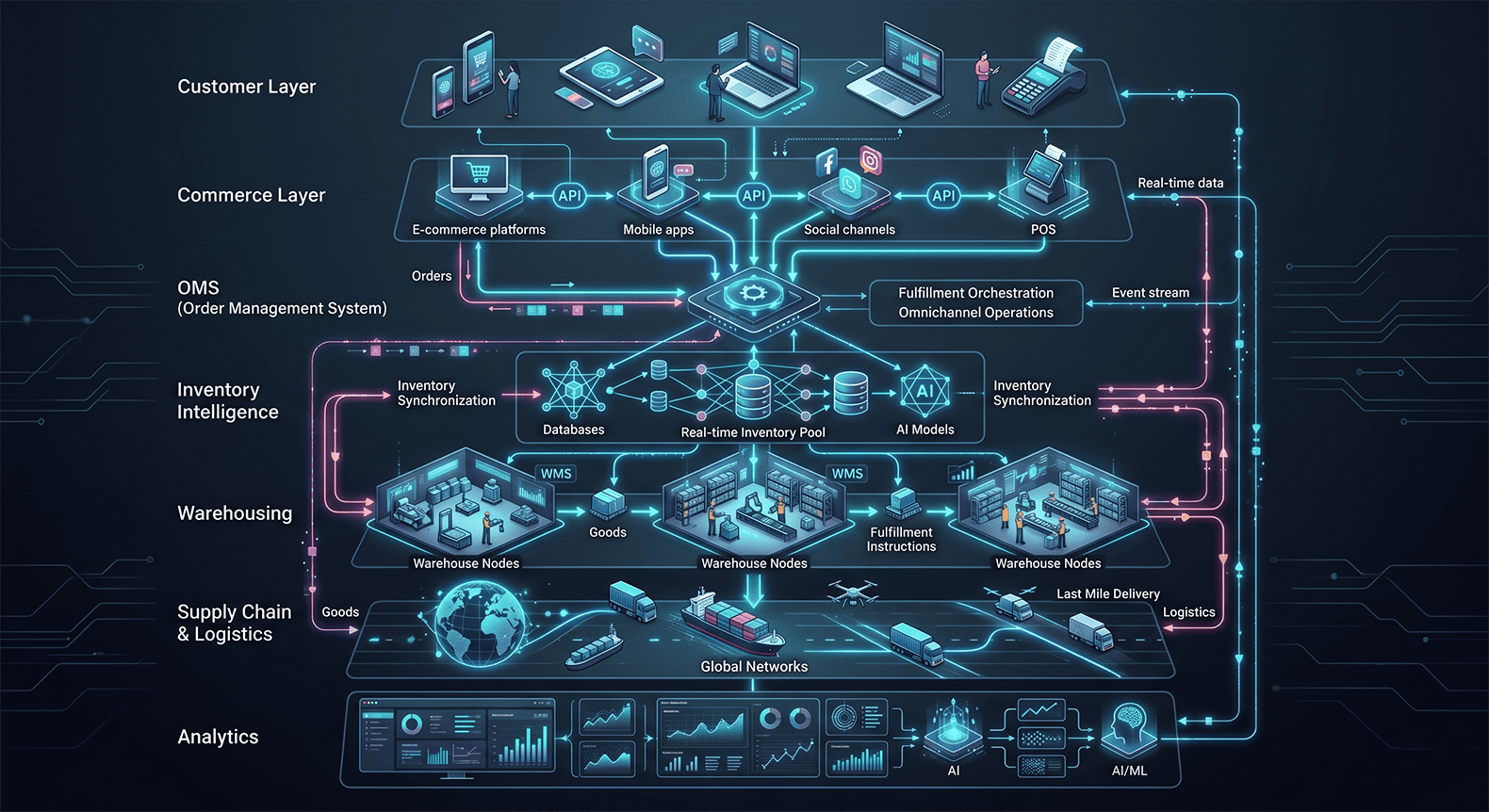
Modern retail requires unified operational intelligence, but that does not mean a giant monolith with more integrations bolted on. It means explicit domain boundaries, an event backbone, and read/write paths designed for concurrent mutation.
graph TD
    A[Channels: Stores, App, Web, Marketplaces] --> B[Order Intake API]
    B --> C[Command Validation Layer]
    C --> D[Order and Inventory Event Log]
    D --> E[Pub Sub Backbone Kafka or Redpanda]
    E --> F[OMS Projection]
    E --> G[Inventory Availability Projection]
    E --> H[Fulfillment Allocation Service]
    E --> I[Finance and Ledger Projection]
    E --> J[Analytics and Forecasting Streams]
    H --> K[Warehouse Execution]
    G --> L[Customer Facing Availability]
This is where generic “API-driven” language stops being useful. At scale, the relevant patterns are:
- Event-Driven Architecture for decoupling operational producers and consumers,
- Event Sourcing for preserving immutable state transitions rather than overwriting truth,
- CQRS for separating write-heavy mutation paths from read-optimized availability, allocation, and analytics views.
In practical retail terms, a sale, return, transfer, receipt, reservation, and cancellation should all be emitted as immutable events. Downstream projections can then materialize:
- sellable inventory by node,
- promised delivery windows,
- replenishment urgency,
- exception queues,
- finance and audit state.
Without that separation, every system is forced to read and write the same mutable records, which is how inventory corruption becomes endemic.
Why AI Fails in Most Retail Companies
Retailers constantly attempt to overlay AI forecasting or automated replenishment onto fragmented, mutable databases. AI cannot fix structural data corruption. If your data foundation consists of daily ERP batch exports full of manual overrides, applying AI simply amplifies operational defects at machine speed.
graph TD
    A[Broken Data Contracts] --> B[Noisy and Contradictory Features]
    B --> C[Unreliable Models]
    C --> D[Automated Operational Failure]
AI is useful only after the event contracts, system-of-record boundaries, and operational truth model are stable enough to trust.
Unified Commerce and Event-Driven OMS
Unified commerce is mandatory. Stores, marketplaces, fulfillment systems, and warehouses can no longer operate independently; they must share one synchronized commerce core. The OMS should not be treated as a static order repository. It should function as a coordination engine sitting on top of an event backbone.
Legacy OMS platforms become operational bottlenecks because they are built around synchronous row updates, blocking workflows, and centrally serialized assumptions about inventory. Modern OMS infrastructure should:
- ingest immutable inventory and order events,
- project availability views optimized for checkout,
- apply command-side reservation logic with idempotency guarantees,
- route fulfillment using cost, SLA, and node proximity,
- tolerate retries and eventual consistency without duplicate operational side effects.
The real contrast is not old API versus new API. It is batch processing versus stream processing. ERP export culture assumes that the business can wait for truth. Kafka- or Redpanda-backed event flows assume that localized fulfillment logic has to react while the state change is still economically relevant.
Push Systems vs. Pull Systems

Traditional retail relies on push systems: forecast, produce, distribute, and hope demand matches. This creates dead inventory, markdown dependency, capital lockup, and poor local fit because the network is acting on stale assumptions.
graph TD
    A[Central Forecast] --> B[Bulk Production Plan]
    B --> C[Static Distribution Allocation]
    C --> D[Inventory Pushed to Nodes]
    D --> E[Markdowns and Excess Stock]
Modern retail requires pull systems. Real-time demand signals, local sell-through, returns, reservations, and availability events should continuously influence replenishment and fulfillment decisions.
graph TD
    A[Real Time Demand Signals] --> B[Event Stream]
    B --> C[Local Availability Projection]
    B --> D[Adaptive Replenishment Service]
    B --> E[Dynamic Fulfillment Allocator]
    D --> F[Purchase and Transfer Recommendations]
    E --> G[Lower Latency Promise]
The result is not abstract agility. It is measurable improvement in inventory velocity, cash efficiency, replenishment precision, and customer conversion.
Distribution Topology and OTIF
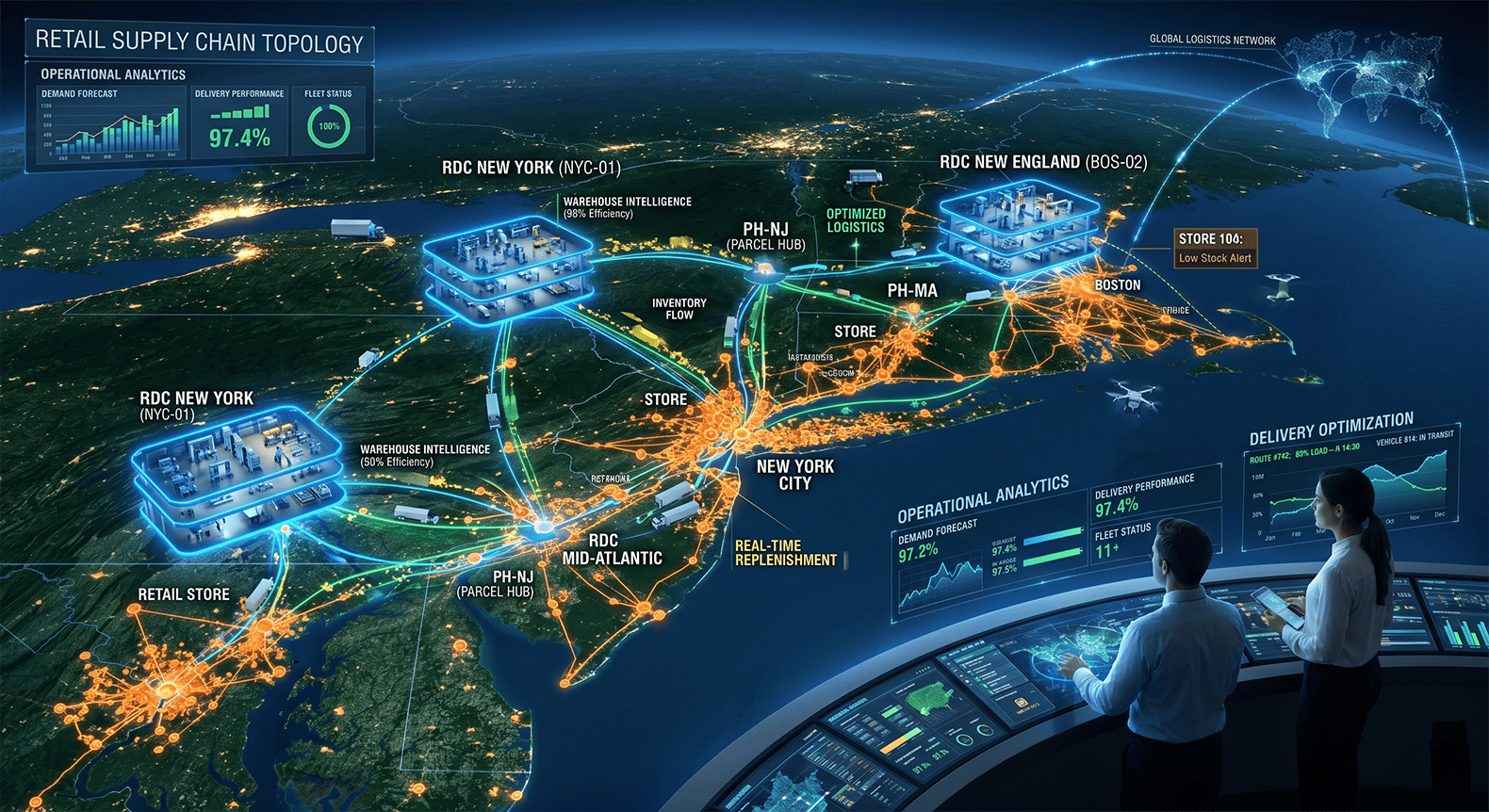
A single overloaded distribution center creates routing inefficiency, replenishment delays, and transit friction. High-performance retail relies on clustered, hub-and-spoke topologies because physical network design is inseparable from software architecture. Node distance, replenishment cadence, parcel-hub proximity, and local carrier reliability all shape the economic performance of the system.
graph TD
    A[Regional DC] --> B[Event Driven Transfer Planning]
    B --> C[Clustered Store Network]
    C --> D[Local Fulfillment or Replenishment]
    D --> E[Lower Transit Latency]
    E --> F[Higher In Stock Rate]
    F --> G[Better Conversion and Margin]
The core operational metric here is OTIF, On Time In Full. The minimum acceptable threshold is OTIF >= 98%. When OTIF degrades, the consequences are immediate: chargebacks, vendor penalties, reduced trust in the replenishment signal, and gross-margin destruction. Operational discipline matters more than aggressive expansion because the network cannot monetize demand if it cannot move inventory predictably.
Real-World Failure Modes
Debt-Fueled Expansion
Big Bazaar and Subhiksha both expanded aggressively, scaling well beyond their system maturity. Subhiksha operated purchasing infrastructure without centralized IT visibility. Big Bazaar became trapped under premium leases and weak omnichannel capability. Both accumulated fatal operational debt because physical footprint expansion outran control-plane maturity.
Geographic Hubris
Target Canada assumed domestic operational success would automatically transfer internationally. Instead, supply chains fragmented, localization failed, and inventory systems collapsed because the expansion skipped operational validation. This is a classic distributed rollout failure: the architecture was not requalified under new constraints before the network was expanded.
Systemic Obsolescence
RadioShack saw its operational systems become too rigid to adapt during technological transitions. The network became too large, too slow, and too inflexible to pivot. Krispy Kreme followed a related pattern: novelty scaled faster than operational consistency and unit economics, so growth amplified structural weakness rather than amortizing it.
The Winning Paradigms
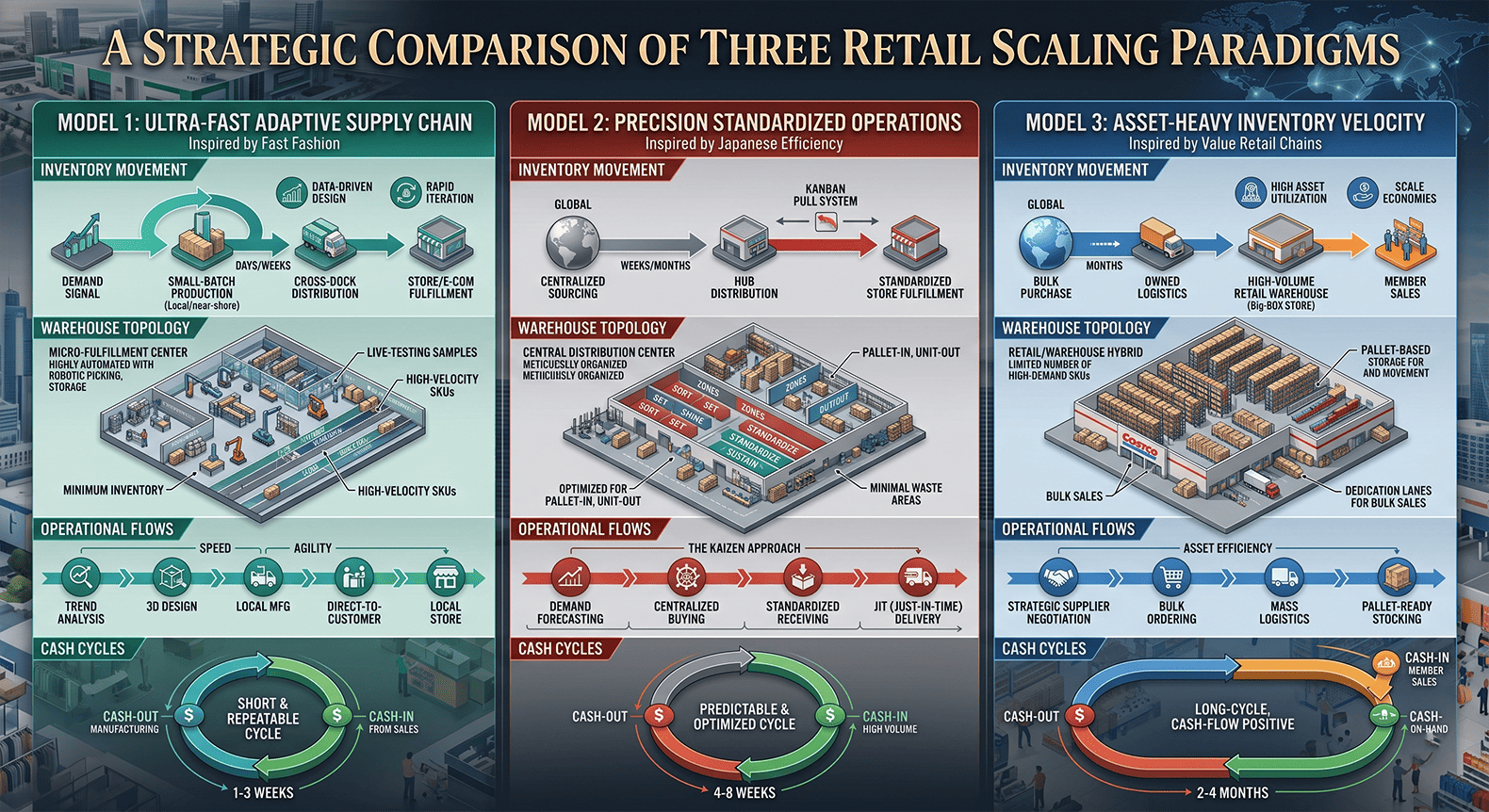
The DMart Asset Moat
DMart scaled through deep financial discipline and suburban clustering. The strength of the model is not just merchandising. It is system design. A strong cash position enables fast vendor payments, which secures supplier discounts, which drives lower consumer prices, which results in high inventory turnover and stronger working-capital efficiency.
graph TD
    A[Strong Cash Position] --> B[Fast Vendor Payments]
    B --> C[Supplier Discounts]
    C --> D[Lower Consumer Prices]
    D --> E[Higher Inventory Turnover]
    E --> F[Improved Cash Conversion Cycle]
    F --> A
The Zara Velocity Paradigm
Zara does not operate as a traditional fashion brand. It behaves like a real-time supply chain intelligence network. Store-level signals do not merely inform planning in a vague sense. They enter a tightly managed feedback architecture in which demand telemetry is collected, published, aggregated, and used to drive adaptive production and rapid replenishment.
graph TD
    A[Store Sales and Try On Signals] --> B[Local Event Producers]
    B --> C[Stream Backbone]
    C --> D[Demand Aggregation and Trend Detection]
    C --> E[Regional Inventory Signal]
    D --> F[Adaptive Production Commands]
    E --> G[Rapid Replenishment Allocation]
    F --> H[Factory and Supplier Response]
    G --> I[Store Level Refill]
    H --> I
    I --> J[Faster Turns and Lower Markdown Risk]
The point is not just speed. It is closed-loop learning with low operational latency, which is how Zara compresses the bullwhip effect.
The Uniqlo Precision Paradigm
Uniqlo scales through controlled rollout sequencing. It launches a flagship, collects local data, stress-tests logistics operations, and validates the model before scaling regionally. Most retailers reverse this process, which is exactly why they fail.
graph TD
    A[Launch Flagship] --> B[Collect Local Demand and Ops Data]
    B --> C[Stress Test Staffing, Inventory and Logistics]
    C --> D[Validate Unit Economics and SLA Stability]
    D --> E[Regional Rollout Decision]
The Da Milano Synergy Paradigm
Da Milano crossed the complexity wall through strict backend unification and synchronized digital and physical operations. The critical lesson is simple: multiple channels and portfolio diversification only work if the operational core remains unified.
The Core Retail Equation
Ultimately, modern retail scaling is governed by a ruthless equation:
Profitability = Revenue - (COGS + Complexity Cost + Coordination Overhead + Inventory Inefficiency + CAC + Fulfillment Friction)
Most failing retailers optimize exclusively for revenue. Winning retailers optimize systemic efficiency. That means fewer stale reads, lower fulfillment latency, cleaner domain ownership, lower exception volume, and tighter control over the cost of coordination.
Final Reality
Opening stores is easy. Coordinating complexity is hard. The future winners in retail will not simply advertise more, add more SKUs, or acquire more physical leases. They will synchronize operations better, govern inventory ruthlessly, and orchestrate logistics with precision. The future of retail belongs to organizations that behave less like traditional merchants, and more like high-performance distributed systems.